Why SEO Matters More Than Ever for Wine Retailers
The competition for online wine sales is heating up, and visibility is everything! With e-commerce now a major channel for wine distribution, every retailer, importer, and boutique shop is competing for the same search clicks. In this crowded marketplace, search engine optimization (SEO) is no longer optional. It’s the foundation that allows potential buyers to find your store, your producers, and your story.
SEO is the practice of improving your website’s visibility when people search for products or information online. For wine retailers, SEO means appearing when consumers look for phrases like “organic Italian wine under 3000 yen” or “buy Pinot Noir online in Tokyo.” It also helps your store appear in generative AI search results, such as Google’s Search Generative Experience (SGE) or Yahoo’s AI summaries, where trustworthy sources are highlighted.
Wine e-commerce faces unique discoverability challenges. Alcohol advertising rules can limit paid promotions on platforms like Google Ads and social media. Large marketplaces such as Rakuten and Amazon dominate the top of search results. And the multilingual nature of wine commerce, which often spans English, Japanese, French, and Italian, adds an additional layer of complexity.
This article explains how wine stores can attract qualified traffic, boost organic sales, and future-proof their visibility in both search and AI-driven discovery.
What Is SEO and Why It’s Critical for Online Stores
SEO makes your site easier to find by people who are actively looking for the products you sell. In practical terms, it ensures that search engines understand your content and display it to relevant audiences.
Wine e-commerce success rests on three key pillars: technical SEO, on-page SEO, and off-page SEO.
- Technical SEO ensures that your website loads quickly, performs well on mobile, and can be crawled and indexed by search engines.
- On-page SEO focuses on optimizing individual pages by refining metadata, headings, and product information so that search engines can easily understand each page’s topic.
- Off-page SEO builds your website’s credibility through backlinks, mentions, and partnerships from other trusted domains.
For online stores, SEO is particularly valuable because organic search remains the largest source of traffic for e-commerce. Organic visibility continues to drive discovery in e-commerce. According to Conductor’s 2024 Organic Traffic Benchmarks, organic search drives about one-third of all website traffic across major industries, while BrightEdge’s AI SEO Guide highlights how search performance depends increasingly on structured, high-quality content optimized for AI-driven results. Meanwhile, paid advertising is getting more expensive and, for alcohol, increasingly restricted.
Unlike ads that stop driving visits the moment you pause spending, SEO delivers sustainable visibility and long-term ROI. When your site ranks well, you continue attracting interested buyers without continuous ad costs. According to Digital Silk, the first organic result captures roughly 27% of all clicks, and the top three results collectively account for over half of user engagement, underscoring how higher rankings directly impact traffic and conversions for e-commerce brands.
What Makes Wine E-Commerce Unique and How SEO Can Help
Selling wine online isn’t like selling books or shoes. It combines strict regulations, complex product attributes, and emotional storytelling. Each bottle tells a story, such as vintage, varietal, region, and producer that matter to buyers and search engines alike.
Regulatory and competitive challenges
Advertising regulations often prohibit paid alcohol promotion in certain markets. Even where it’s allowed, targeting restrictions limit reach. As a result, organic visibility is one of the few scalable, compliant ways to reach consumers directly. Meanwhile, major e-commerce marketplaces dominate generic search queries, making it difficult for small retailers to compete on broad terms.
The multilingual dimension
Wine audiences are international. A Japanese wine importer might sell French Bordeaux, Italian prosecco, and local Japanese koshu, each with a different language profile. Search behavior also differs across languages: Japanese consumers may use hiragana or katakana for varietals, while English speakers search by region or grape name. This means that effective SEO requires understanding and optimizing for these nuances.
How SEO addresses these issues
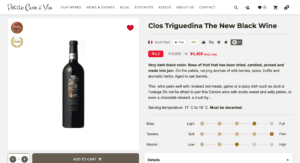
Implementing structured data following Google’s official Product structured data guidelines helps search engines interpret key wine attributes such as vintage, varietal, producer, and region. This markup enables rich results that display details like ratings, prices, and availability directly in search. Optimizing for local search using phrases such as “buy wine online Tokyo” or “wine delivery Kyoto” helps stores capture location-based demand.
Equally important is creating unique, story-driven content. Search engines value originality, so writing your own tasting notes, producer stories, and vintage updates gives your store both authority and personality. It also helps avoid the common pitfall of duplicate manufacturer descriptions, which can hurt rankings.
Basic SEO Optimizations Any Wine Store Can Implement
Every wine store can improve its visibility with a few foundational optimizations.
Start with keyword research to understand what potential buyers are actually searching for. Free tools like Google Keyword Planner or professional platforms such as Ahrefs and Semrush reveal the search volume and competitiveness of relevant terms. Instead of chasing broad keywords like “red wine online”, focus on specific, intent-driven searches: “organic cabernet sauvignon Japan delivery” or “best sparkling wine gifts Tokyo.”
Next, refine your page titles and meta descriptions. Each product page should have a clear, keyword-focused title that includes the vintage and region. For instance, “2018 Barolo DOCG – Organic Nebbiolo from Piedmont” communicates far more than a generic “Red Wine 750 ml.” Meta descriptions, limited to about 155 characters, should highlight what makes the wine unique and include a subtle call to action; for example, “Free delivery in Japan” or “Direct from the producer.”
Optimizing images is another easy win. Rename image files descriptively (e.g., 2018-barolo-piedmont.jpg), use accurate alt text, and compress large files to improve page speed. Google’s PageSpeed Insights can identify which images slow down your site.
Equally critical is mobile optimization. With more than 60% of e-commerce traffic now originating from smartphones, a mobile-friendly layout is non-negotiable. Navigation should be intuitive, and checkout friction minimal. According to DemandSage’s 2024 SEO report, nearly half of consumers will abandon a page that takes more than three seconds to load.
Finally, maintain logical internal linking between related pages. Producer pages should link to their wines, product pages should point to relevant blog posts or guides, and collection pages should direct shoppers to related varieties. This not only aids navigation but also signals to search engines how your content connects, reinforcing topical authority.
Advanced SEO Measures (Typically Handled by Experts)
Once foundational elements are in place, more technical and strategic measures can elevate a wine store’s search performance further.
Technical SEO audits
A professional audit ensures that search engines can properly crawl and index your site. Specialists use tools like Screaming Frog and Google Search Console to identify broken links, redirect issues, and crawl bottlenecks. They can also validate structured data with Google’s Rich Results Test and verify that XML sitemaps and canonical tags are correctly configured.
International and multilingual SEO
For stores targeting multiple languages or regions, proper implementation of hreflang tags prevents duplicate content and helps Google serve the right version of each page. Experts also evaluate URL structures by deciding whether to use subdirectories (e.g., /en/, /jp/) or localized domains. Adapting keywords and metadata per language is critical: a French buyer searching “vin bio” behaves differently from a Japanese consumer entering “オーガニックワイン.”
Structured data and wine-specific schema
Structured data remains one of the most effective ways to help search engines display visually enhanced listings. By following Google’s Product structured data guidelines, online wine stores can include attributes such as vintage, grape variety, producer, alcohol content, and food pairing within the Product schema. Listings with this markup are more likely to appear as rich results showing price, rating, and availability, thereby increasing click-through rates and shopper engagement.
Content strategy and clustering
Topic clustering, or grouping content by theme, strengthens authority across related searches. For instance, a “French Wines” pillar page can link to subtopics like “Burgundy Pinot Noir,” “Bordeaux Blends,” and “Loire Valley Sauvignon Blanc.” Internal linking among these reinforces semantic connections, helping search engines see your expertise.
SEO for generative AI
Search is evolving rapidly with the rollout of Google’s SGE and similar AI-driven experiences. These systems generate answers using a blend of web content and structured data. According to Xpert Digital’s overview of SGE, authoritative sites with well-structured information are more likely to appear in AI summaries. To maximize your inclusion, publish accurate, trust-based content under identifiable author profiles, and ensure technical markup is flawless.
The Role of Content in Wine SEO
Content is the bridge between storytelling and discoverability. In wine e-commerce, great content doesn’t just fill pages, it builds trust and drives conversions.
Educational and lifestyle content performs particularly well. Profiles of winemakers and producers convey authenticity and humanize the brand. Seasonal pairing guides, such as “Wines for Summer BBQs” or “Perfect Reds for Winter Stews” , give shoppers reasons to revisit a site. Articles explaining grape varieties or regions can attract top-of-funnel traffic while subtly promoting your catalog.
Balancing creativity with optimization is key. Each article should naturally incorporate target keywords but remain engaging and useful. Structuring posts with clear subheadings and internal links improves readability and crawlability. Adding schema markup for articles or FAQs can enhance visibility in search results through rich snippets.
Consistency also matters. Regularly updated blogs signal freshness and authority to search engines. According to Orbit Media’s 2025 Blogger Survey, companies that publish 16 or more posts per month generate nearly four times as much traffic as those publishing fewer than four. For wine retailers, maintaining a steady rhythm of even one or two quality posts per month can build lasting organic momentum.
Measuring SEO Success Over Time
SEO is a process, not a project and tracking performance helps identify what’s working and where to improve.
Start by monitoring organic traffic through Google Analytics 4 (GA4) and search visibility in Google Search Console. These tools show which queries bring visitors to your site and how those users behave once they arrive. Tracking keyword rankings across your core product and region terms reveals whether your optimization efforts are gaining traction.
Conversion data matters most. Rising traffic is positive, but sales and engagement tell the real story. Measure how many organic visitors add to cart, complete checkout, or subscribe to newsletters.
Technical metrics such as crawl errors, Core Web Vitals, and page speed also reflect site health. Use Search Console’s indexing reports and PageSpeed Insights to ensure pages are accessible and performant.
Finally, assess backlink growth and quality. Mentions from credible food, travel, or wine media add authority and boost rankings. According to the Semrush 2025 ranking factors study, backlinks and content quality remain two of the strongest predictors of search performance.
SEO must evolve alongside search behaviour and algorithm changes. With the continued rise of AI-powered discovery, maintaining structured, trustworthy, and content-rich pages ensures your brand stays visible even as the search landscape shifts.
Conclusion: Don’t Let Your Winery or Shop Get Lost in the SERP Noise
Having an exceptional wine selection is only part of success online. Without visibility, even the best-curated catalog remains unseen. SEO is how your store becomes discoverable, credible, and chosen. Unlike fleeting ad campaigns, it’s a long-term investment that compounds over time.
Optimizing for both traditional search and AI-driven experiences future-proofs your brand. Structured data, clear site architecture, and compelling content ensure search engines, as well as the next generation of AI discovery tools, understand and feature your wines accurately.
If you’d like to strengthen your online presence and ensure your wine shop stands out across search and AI platforms, contact the team at Netwise. Our expertise in digital marketing for the wine trade can help you attract more qualified buyers and build lasting organic growth.