
Japan’s wine market is expanding rapidly, and digital channels are now central to that growth. The total wine sector was valued at USD 30.2 billion in 2024 and is projected to reach nearly USD 49 billion by 2033 (IMARC). The EU-Japan Centre estimates that around 30 million people in Japan are wine consumers. Within this consumer base, online sales have grown quickly. Only a few years ago, e-commerce accounted for about 10 percent of sales, but it has now risen to 15 percent and continues to expand as the fastest-growing distribution channel, according to GourmetPro’s analysis of Japan’s wine market.
E-commerce is now indispensable for wineries, importers, and retailers alike. It is the most direct way to build a brand presence, educate customers, and deliver wine to homes. Yet wine differs from other online categories such as fashion or beauty. Shoppers cannot taste or smell before buying. The language of wine can intimidate those who are less experienced. Compliance with alcohol laws and the need for temperature-sensitive shipping add unique constraints.
For these reasons, a wine e-commerce site must be more than a functional catalog. It must act as a sommelier, a storyteller, and a trusted logistics partner all at once. To achieve this, six features stand out as essential for any online wine shop that aims to succeed in Japan’s competitive and growing market.
Findability through Advanced Search and Rich Product Descriptions
The first barrier between a shopper and a purchase is the ability to find the right bottle. Some customers arrive with a precise name in mind, while others know only that they want a “good sparkling under ¥3,000.” An effective store ensures both groups can navigate confidently.
Advanced filtering is a cornerstone of this process. Customers should be able to refine their search according to:
- Grape varietal, producing region, and vintage
- Style, sweetness level, and body
- Price brackets, from value to premium tiers
- Food pairings, such as sushi, yakiniku, or holiday meals
- Awards, critic scores, and special certifications
Smart search functions that tolerate misspellings, recognize synonyms, and suggest relevant results are equally important. A shopper typing “ボルドー” should see Bordeaux wines, just as someone typing “cab sav” should be directed to Cabernet Sauvignon.
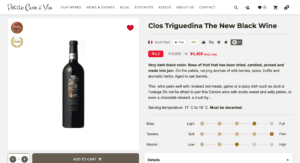
Once a bottle is selected, the product page must work hard to replace the in-store tasting. At a minimum, it should include tasting notes, food pairing suggestions, and background on the producer. Many successful sites go further, offering critic scores, awards, or even interactive vineyard maps. High-resolution images of the label and bottle are essential, while video clips or 360-degree views add depth.
For trade professionals, consistency matters. Clean taxonomy, accurate vintage data, and standardized tasting notes not only build customer trust but also support integrations with external databases or logistics platforms. Poorly structured product data, by contrast, signals a lack of professionalism and can damage credibility with both B2B and B2C audiences.
Back-in-Stock Notifications
Scarcity is part of wine’s appeal. Limited vintages, special imports, and small-batch bottlings create urgency and elevate desirability. Yet when a customer encounters a “sold out” notice, it often leads to a lost sale and potentially a lost relationship.
A back-in-stock notification system addresses this challenge by capturing demand even when supply is temporarily unavailable. When a product is sold out, the site should invite visitors to provide an email address or mobile number to receive an alert once it returns. This feature offers three clear benefits:
- It preserves customer intent by converting frustration into anticipation.
- It provides data on which wines have the strongest unmet demand.
- It offers opportunities to re-engage customers through personalized communications.
Some retailers in Japan enhance the effect by turning restocks into events. They send early notifications to those on the waitlist, sometimes paired with limited-time discounts or priority ordering. Others segment waitlists to provide premium subscribers with first access. In all cases, the goal is the same: transform stock limitations into engagement opportunities.
Recommendations, Cross-Selling, and Personalization
Wine is rarely a single-bottle purchase. Customers often buy multiples, either to stock up or to explore a theme. An intelligent recommendation system helps increase both basket size and customer satisfaction.
The most effective implementations combine cross-selling with personalization. Standard approaches include “you may also like” panels or curated bundles such as a trio of Bordeaux reds. More advanced systems use algorithms to analyze browsing behavior and past purchases, tailoring suggestions to each visitor. If a customer often buys New World Pinot Noir, the site can highlight similar varietals from Oregon, New Zealand, or Chile.
Social proof plays a complementary role. Japanese consumers place significant weight on community and expert validation. Retailers should highlight:
- Customer reviews with star ratings and text feedback
- Press mentions, critic scores, and awards
- Best-seller tags that indicate popularity among peers
- Seasonal picks or “staff favorites” for added authority
According to Digittrix’s analysis of wine e-commerce platforms, AI-driven recommendation engines can learn over time, not only improving individual targeting but also identifying broader market trends. This makes the online shop function less like a catalog and more like a digital sommelier, guiding each visitor to choices they are likely to enjoy.
Spotlighting Top-Rated and Best-Selling Wines
Choice can overwhelm. A customer faced with hundreds of listings may hesitate rather than decide. Curated collections provide shortcuts to decision-making and highlight the credibility of the retailer.
Best-seller and top-rated sections should be visible from the homepage and accessible via navigation menus. These categories guide customers toward wines that have already earned recognition, whether from other shoppers or from professional critics. Seasonal collections are equally powerful. A “Holiday Favorites” page in December, or a “Summer Refreshers” section in July, aligns the catalog with cultural and seasonal buying patterns.
Spotlight sections also support merchandising strategy. Retailers can use them to:
- Concentrate demand on high-margin or strategically important wines
- Promote categories expected to grow, such as sparkling wines, which analysts project will expand at 3.6 percent CAGR from 2022 to 2027 in Japan
- Showcase organic, biodynamic, or natural wines to capture emerging consumer interests
For less experienced consumers, these curated areas reduce complexity and increase confidence. For specialists, they demonstrate that the retailer understands trends and consumer psychology.
Seamless Checkout and Delivery Experience
The checkout stage is where retailers either secure or lose the sale. Even small frustrations can drive abandonment. In wine, legal restrictions and delivery challenges make this stage even more delicate.
Mobile-first design is non-negotiable. Japanese consumers rely heavily on smartphones, so the checkout flow must be fast, clear, and easy to complete without pinching or zooming. Guest checkout options reduce friction for first-time buyers, while auto-fill and address lookup further streamline the process.
Equally critical is offering a wide range of payment methods, including:
- Credit cards such as VISA, Mastercard, and JCB
- Convenience store (konbini) payments
- QR-based mobile wallets like PayPay and Line Pay
- Bank transfer options for more traditional buyers
- Cash on delivery, still expected by some customers despite its limitations for fragile products
Shipping transparency is just as important. Customers want clarity on fees, delivery slots, and whether cold-chain logistics are used for premium bottles. Clear communication reduces uncertainty, while offering flexible time slots builds trust and convenience.
Finally, compliance with Japan’s alcohol sales laws requires age verification and careful handling of delivery. These checks should be integrated smoothly so as not to interrupt the customer journey. Retailers that demonstrate compliance build credibility with both regulators and consumers, a best practice emphasized in BigCommerce’s overview of wine e-commerce.
Loyalty Programs, Subscriptions, and Referrals
Wine is a product built on repeat purchasing. A customer who enjoys one bottle is highly likely to return for another, provided the experience is positive. Loyalty mechanisms transform one-off sales into lasting relationships.
Point-based systems resonate strongly in Japan, where platforms like Rakuten and T-Point have trained consumers to value reward accumulation. Wine shops can mirror these expectations by awarding points per purchase, redeemable for future discounts. Bonus points for writing reviews or referring friends create additional engagement.
Subscription models, often presented as wine clubs, add even greater stability. Members receive regular shipments curated by experts, often organized around themes such as “Old World Classics” or “Natural Wines.” The appeal lies not only in convenience but also in exclusivity. Benefits typically include:
- Early access to limited releases
- Discounts reserved for members
- Invitations to events or online tastings
- Communication directly from winemakers or sommeliers
Referral programs extend this effect by rewarding customers who bring in friends. A ¥500 credit for each successful referral, for example, turns customers into advocates. First-time buyer coupons further lower entry barriers, encouraging trial among new visitors.
Together, loyalty, subscription, and referral programs provide a framework for sustainable revenue growth and stronger customer retention.
Bringing It All Together
When combined, the six features described above create a comprehensive framework for e-commerce success. To illustrate, imagine a typical customer journey.
A new visitor arrives via a blog post titled “Top Summer Whites Under ¥3,000.” On the homepage, they encounter a spotlight section showcasing best-selling bottles. They filter results by varietal and body, quickly narrowing choices. On a product page, they find tasting notes, critic scores, and detailed images, supported by cross-sell recommendations.
The customer adds two bottles to the cart. A checkout prompt suggests that one more purchase will unlock free shipping. They accept, proceed through a mobile-optimized checkout, and pay with PayPay. They select an evening delivery slot with cold-chain shipping. Post-purchase, they receive confirmation, tracking, and an invitation to join the loyalty program.
Two weeks later, they receive a back-in-stock notification for a wine they had bookmarked. They return, purchase again, and this time redeem loyalty points for a discount. Over time, the store has transformed a casual visitor into a recurring customer, guided by features that reduce friction and build trust at each stage.
Measurement and Continuous Improvement
Building these features is only the start. Continuous measurement and optimization are required to maintain competitiveness. Retailers should monitor:
- Conversion rate and abandonment at each step of checkout
- Average order value and lifetime value of customers
- Response rates to back-in-stock notifications
- Uptake of loyalty programs and subscription clubs
- Effect of recommendations on basket composition
Testing small variations, such as emphasizing reviews, adjusting shipping thresholds, or refining product descriptions, can reveal new opportunities. Incremental improvements add up, creating a virtuous cycle of higher engagement and stronger financial performance.
Conclusion
Japan’s online wine market is growing quickly, driven by both convenience and consumer interest in premium selections. The opportunity is significant, but competition is intensifying. To stand out, wine retailers must offer more than a catalog. They must deliver an experience that builds trust, simplifies discovery, and rewards loyalty.
The six features outlined here, i.e., advanced search and product descriptions, back-in-stock notifications, intelligent recommendations, curated best-seller spotlights, seamless checkout and delivery, and robust loyalty programs, form the foundation of that experience. They transform an online shop from a transactional channel into a long-term growth engine.
For wine professionals, importers, and marketers, these features are not just enhancements but essential to having a successful online sales channel in Japan. If you’re looking for an e-commerce platform that has all of these important features, you’ll definitely want to check out Wine Kiosk. If you like what you see and want to learn more, we’ll be happy to provide you with a product demonstration.